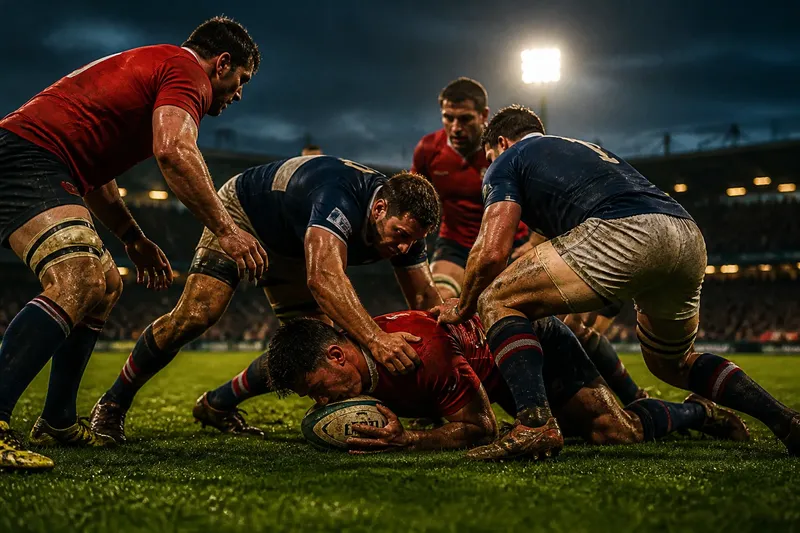
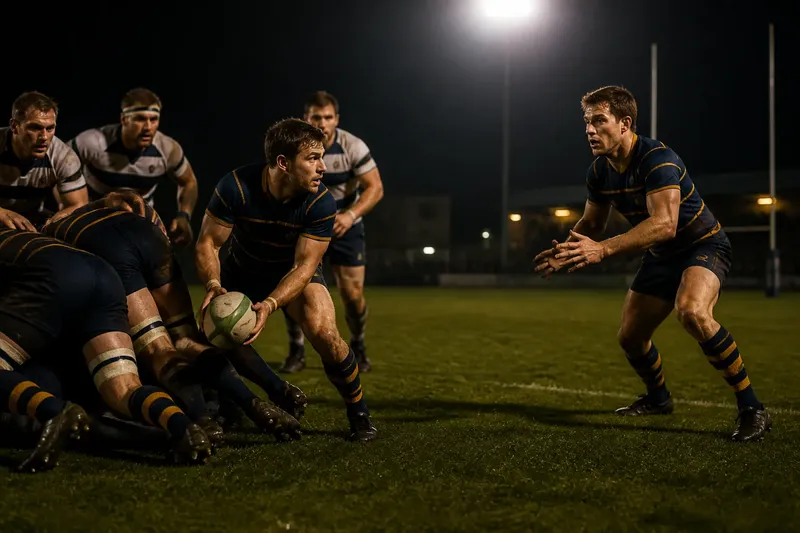
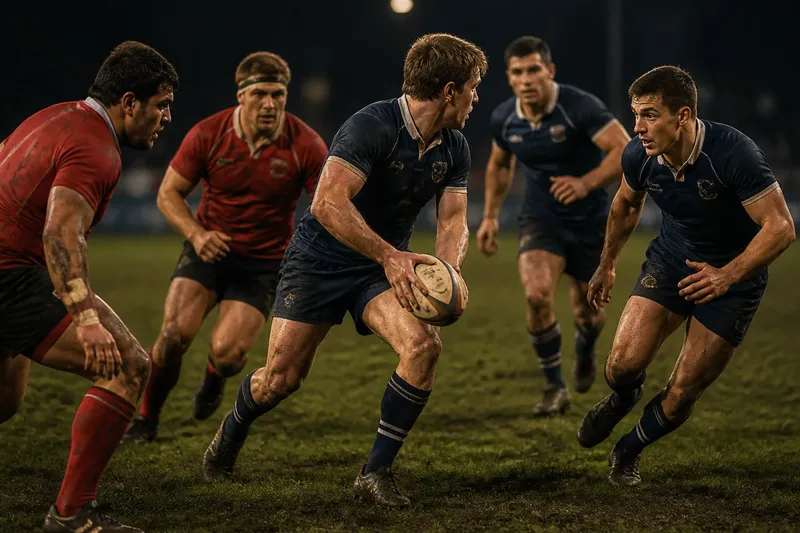
A Rainy Rugby Match, Read Through Territory
Read a rainy rugby match through territory: follow each kick, chase and next possession to see whether field position creates pressure or an escape route.
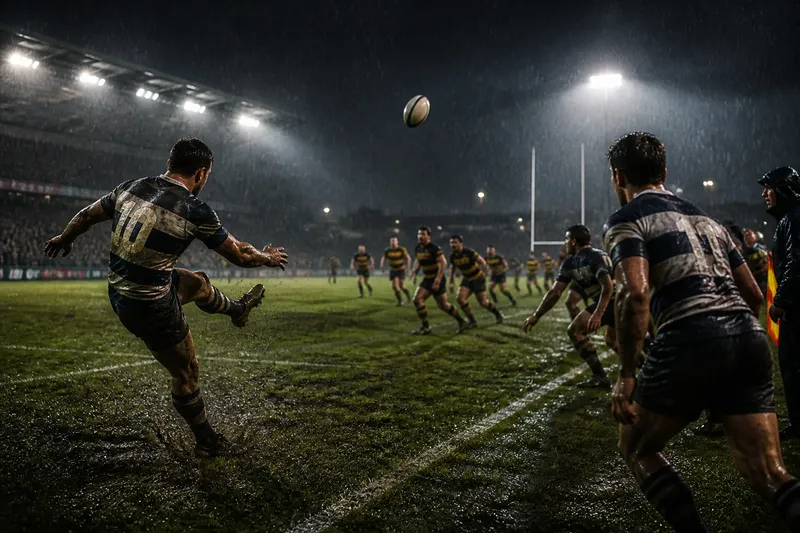
A rainy rugby match is easier to read when you follow the kick, the chase and the next possession as one sequence. A ball landing inside the opposition’s 22 puts play near its try line, but the next phase still depends on the catch, the pressure and the choices that follow.
Territory shows where the next attack can begin
Territory means the part of the field where play is happening and, more usefully, how close a team is to the opponent’s try line. It is not the same as possession. A side can pass through several phases near its own goal line while the other team, after one accurate kick, gets to attack deep in the opposite half.
In wet weather, handling can become less dependable, and a slippery ball may make a catch or pass harder to control. The effect varies with the surface, rain, wind and players’ choices. Ask not only who has the ball, but where they are and what options are available from there.
Use halfway and the two 22-meter lines as landmarks. A team repeatedly carrying the ball out of its own 22 may be trying to clear immediate pressure. A kick into the opposition’s 22 changes the location of the next contest; whether that produces pressure depends on how the ball is received and what the defending side can do next.
Wet conditions change the calculation behind a kick
A kick can move the contest forward without asking a player to complete several passes in slippery conditions. It can also make the opponent catch, gather or carry the ball under pressure. The aim may be to gain ground, force a hurried decision or create a chance to recover possession; the ball sailing downfield is not, by itself, evidence of a good outcome.
Teams still need to weigh the risks. A kick with little chase can hand the opposition a clean catch and room to counterattack. A kick that travels too far may lead to a restart or touchline decision that returns play toward the kicking team, depending on where it was made and the laws that apply. Wet weather changes the calculation, not the need to keep the ball and the chase connected.
Before the kick, notice whether teammates are set to chase, whether there is space behind the defensive line, and whether the kicker has time to aim. Then watch the landing point and first contest. Those details help distinguish a planned territorial play from a hurried clearance or an attempt to use open space.
A useful kick changes the next contest
Compare the kick’s landing point with where the attacking team started, then account for what happens next. A kick that advances the ball but allows the receiving side to return it immediately may produce little lasting benefit. A shorter kick that pins the opponent near a touchline can be more useful if the chase closes off easy exits.
Direction matters alongside distance. A kick toward the sideline can limit the receiver’s choices, while a central kick may leave room to run either way. Wind and the ground’s condition can affect flight and bounce, so judge the result by the contest that follows rather than by the apparent elegance of the kick.
Say a team receives the ball just outside its own 22 in steady rain. Its kicker sends the ball toward the opposition’s touchline, and several teammates arrive together as the receiver gathers it near the sideline. The expected observable result is whether the receiving side has a clear route out or must kick under pressure; an easy exit can invite a counterattack, while a hurried clearance may keep play in the same end of the field.
The chase reveals whether ground can be held
Follow the chase and the receiver, not only the ball. A well-organized chase can pressure a catch, prevent an easy pass and encourage the receiver to kick back. If chasing players arrive separately, the catcher may have time to choose a safe run or pass, making the original territorial gain easier to undo.
Look for the next phase. The receiving team might carry, pass, kick or seek touch, and each choice changes where the next contest begins. A successful catch does not necessarily mean the receiving side has escaped pressure; a hurried clearance can return the ball to the kicking team’s attacking half.
When the ball goes into touch, note where the lineout will be and which team will throw in. A side may choose touch to trade possession for a more favorable field position, while the opponent may have a chance to win the throw and attack. The lineout is not an automatic reward for the team that kicked.
Repeated kicks do not always make a match safer
Territory is useful only if a team can manage the next contest. Repeated kicks can put the opposition under pressure, but they can also offer repeated chances to catch cleanly and return the ball. In wet conditions, a loose kick may be costly if the kicking team has left space behind its chase or has not organized its defensive line.
Possession has its own trade-off. Holding the ball near one’s own try line may invite a handling error or a turnover close to danger; carrying and passing can also draw defenders and create room for a later kick. Teams may switch between these choices as the field position, pressure and available space change.
Think of territory as a doorstop, not a lock: it can keep pressure in one area, but it does not prevent the other side from opening a route back. A team that kicks deep and then defends the return well may turn field position into sustained pressure. One that kicks deep but loses the chase may have moved the ball while leaving the opponent with the initiative.
Wind and rain affect different parts of the sequence
Rain affects handling and the ground; wind can alter a kick’s flight and distance. Together, they can make a planned high kick harder to judge and a long clearance less predictable. Watch whether the kicker favors a lower, more direct kick or a higher ball that gives chasers time to arrive, then compare the choice with the landing and contest.
The same kick can make sense for one team and look risky for the other, depending on which direction it is attacking and whether the wind helps or resists it. A side defending against the wind may find it harder to clear its half with one kick. The opposing side can then press for longer, but still needs to avoid forcing a pass in traffic simply because the field position looks inviting.
Do not treat every bobble as proof that weather dictated the decision. A bounce can come from the surface, a player’s angle or an awkward contest. Read the sequence: what options were available, what choice was made, and where did the next phase begin?
Repeated starting points show who controls territory
Look for recurring starting points rather than one dramatic kick. If one side keeps beginning attacks near halfway while the other repeatedly exits from its own 22, the first side is likely controlling field position even if possession changes often. If the same team must defend several phases near its try line, the pressure is more substantial than a single long kick suggests.
Keep a loose mental record of where each team receives the ball, where it sends the next kick, and whether the opponent can return it cleanly. You do not need to count every pass. A pattern becomes visible when one side’s clearances keep coming from deep and the other side’s attacks keep restarting in the same half.
Set pieces and penalties can reset that pattern. A penalty may let a team kick for touch and contest a lineout far downfield; a scrum or lineout can also give the team with possession a stable platform to attack. When field position changes suddenly, look for the event that caused it instead of attributing everything to the weather.
Four observations help read wet-weather territory
- Starting position: Check whether the team receives the ball near its own 22, around halfway or deep in attack. If it receives near its own line, expect a likely clearance or a cautious exit; if it receives high upfield, watch for a kick or attack that can maintain pressure.
- Kick type: Check whether the kick is a clearance, a kick toward touch, a contestable ball or a kick into open space. If the kick has a clear target and a chase is forming, watch how the contest develops; if it is hurried with no support, expect the receiving team to have a cleaner chance to counter.
- Chase shape: Check whether teammates arrive together or in separate waves. If they arrive together, watch for pressure on the catcher; if they are spread out, expect more room for a run or pass and note whether the defensive line can recover.
- Next possession: Check where the receiving side’s next possession begins. If it starts deep and under pressure, the kick may have held useful ground; if the receiver escapes and returns play quickly, the kicking side may need to reorganize rather than assume territory is secured.
- Touch and restart: Check where the ball crossed the sideline and which side gets the throw. If the resulting lineout gives the kicking side a useful field position and a chance to contest possession, the choice may have served its purpose; if the opponent gets a favorable throw or the restart returns play, watch for the advantage to change hands.
- Weather and direction: Check which way the wind is blowing and whether the kick’s flight or bounce departs from its apparent aim. If the wind helps the kick reach a useful contest, note whether the chase is ready; if it works against the kicker, watch for a shorter exit or a different route out of pressure.
These observations connect the choice, the weather-shaped contest and the next field position. They are more useful than judging each kick alone.
Questions about territory in a rainy rugby match?
Does a rainy match always favor the team that kicks farther?
No. Distance can help a team escape pressure or push an opponent back, but a kick without a chase may give the receiver time and space. A shorter kick that forces a difficult catch or keeps the opponent near touch can matter more than a long clearance.
Why does the ball sometimes bounce unpredictably?
A wet ball and a damp or uneven surface can make the bounce harder to judge, while the kick’s angle and speed also affect its path. Watch where players position themselves before the bounce; that reveals whether they are prepared to contest it or are reacting after the ball changes direction.
Can a team have less possession but control the match?
Yes. If it repeatedly forces the opponent to receive the ball deep, then wins territory back with accurate kicks and organized pressure, it may shape where play happens despite shorter spells of possession. The clearest sign is the recurring location of the next attack, not one clearance.
How should I read a kick that goes straight into touch?
Check where it was kicked from, where it crossed the sideline and which team gets the throw. The laws governing kicks into touch depend on the situation, including the kind of restart and where play began, so the referee’s signal and the resulting lineout are useful clues. A territorial choice helps only if the expected restart position and possession outcome make sense together.
To read a rainy rugby match through territory, track where the ball starts, where the kick sends it, how the chase arrives and where the next possession begins. That sequence shows whether a team has kept the opponent pinned, opened a route for a counterattack or simply exchanged one patch of wet grass for another.