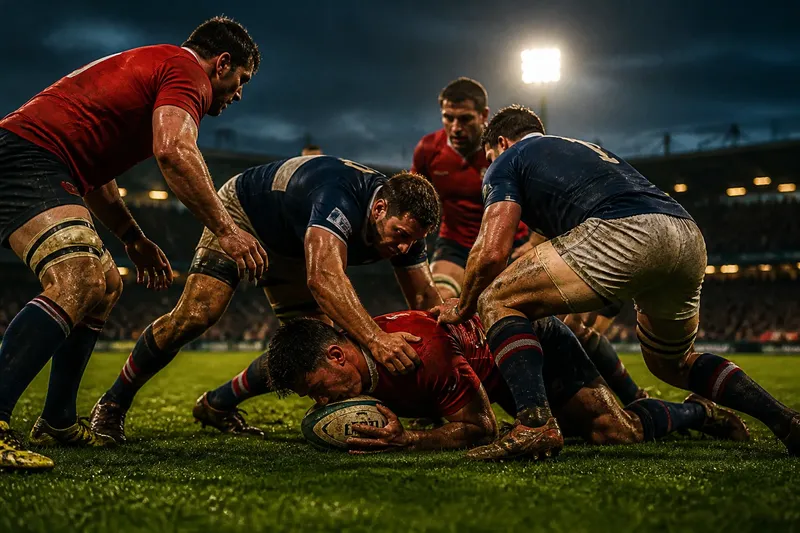
Scrum-Half or Fly-Half: Where Each Role Begins
Scrum-half or fly-half: see who connects possession to the next action, how each role reads defenders, and where to look as an attack takes shape.
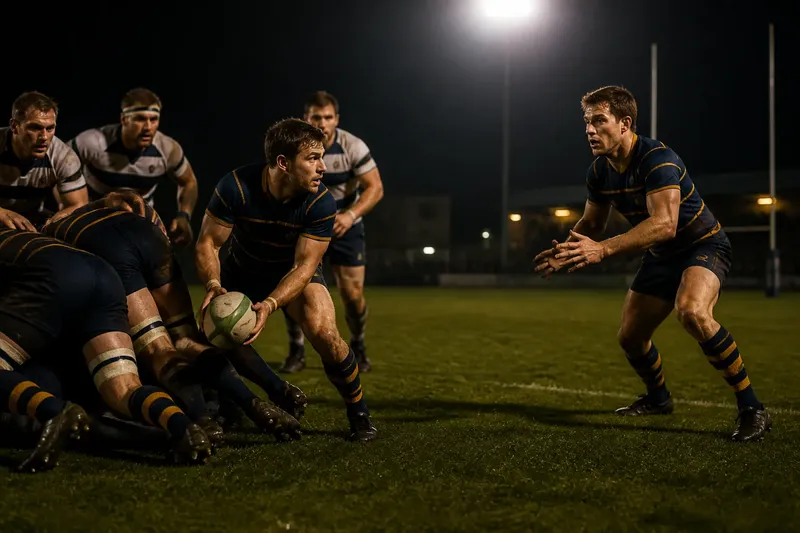
To tell the scrum-half from the fly-half, watch who collects the ball and who receives it next. In rugby union, the scrum-half usually works close to the ruck or scrum, while the fly-half often stands farther out to assess the defense and shape the attack.
Those are recurring responsibilities, not fixed boundaries. Either player can run, pass, or kick, and a team may change its formation from one phase to the next.
The scrum-half connects possession to the next action
At a ruck, the scrum-half commonly retrieves the ball once it is available and passes it to a back or runner. The player may also run from the base if defenders leave space, or hold briefly while teammates get into position.
At a scrum, the scrum-half throws the ball into the scrum from the side of the team’s put-in, then is usually ready to play it when it emerges. At a lineout, the player often waits near the back of the line or behind the catch, prepared to distribute. The exact arrangement depends on the team’s plan.
Working close to the ball offers a clear view of whether possession is ready, but leaves less time to survey the field. A nearby defender can put pressure on the next pass, so the scrum-half’s decision may need to be immediate.
The fly-half reads the wider picture
The fly-half usually starts farther from the source of possession, often as a likely first receiver among the backs. From there, the player can assess the defensive line, available runners, and space beyond the defenders before choosing a pass, run, or kick.
A pass can send the ball to a center or wider runner; a short pass can put a teammate through a gap; a kick can target open space behind the defense. The fly-half may also carry the ball to hold defenders in place. These options depend on the defensive shape rather than on a fixed rule for the position.
Starting depth changes the time and angle available. Standing closer can help the attack move quickly, while standing deeper can offer a broader view and more room to respond to a rushing defense. The difference is like moving a chair to see around a table: useful, but not a substitute for deciding where to look.
Follow the ball to identify each role
After a ruck or scrum, first watch the player nearest the ball. If that player retrieves it and makes the initial pass, the scrum-half is likely connecting possession to the backs. Then follow the receiver: the fly-half may take the next decision, though another player can serve as first receiver.
Say you are watching an invented situation: a team wins a ruck near midfield, and defenders are advancing quickly on the right. The scrum-half passes to a close runner, who draws a defender; the fly-half then receives the next pass and directs play toward the less crowded side. The observable sequence is retrieval, a short connection, and a wider decision after the defense shifts.
If the scrum-half passes directly to a center, the fly-half has not necessarily left the play. The team may be using a different first receiver, with the fly-half positioned to take a later pass or occupy defenders elsewhere.
Scrum-half or fly-half depends on the moment you are reading?
Who usually passes from a ruck?
The scrum-half commonly retrieves and distributes the ball once it is available. The fly-half may receive that pass and choose the next attacking option.
Does the fly-half always receive the first pass?
No. The first pass can go to a center, another back, or a nearby runner. The fly-half may still influence the phase from another position.
Which player is more likely to kick?
Either player can kick. The fly-half often has a useful view for a tactical kick, while the scrum-half may kick from near the base when an immediate opportunity appears.
Can one player take on both roles?
Responsibilities can shift during broken play or when a player is out of position. Follow who is nearest the ball and who becomes the main decision-maker, rather than relying only on shirt numbers.
Read the connection before judging the choice
Separate the sequence into two questions: who makes the ball available, and who chooses the wider route? The scrum-half often handles the first task and the fly-half often handles the second, but teams can combine or rearrange those jobs.
Shirt numbers can offer a clue, but formations and substitutions can make them less useful than position and movement. To follow the roles, watch who arrives at the ball, who receives the next pass, and how the defense responds. Scrum-half or fly-half becomes easier to read when you track that connection rather than treating either position as a script.