How a Rugby Switch Move Opens Space
Learn how a rugby switch move uses a late change of line to draw defenders, preserve support, and help the carrier find a clearer route forward.
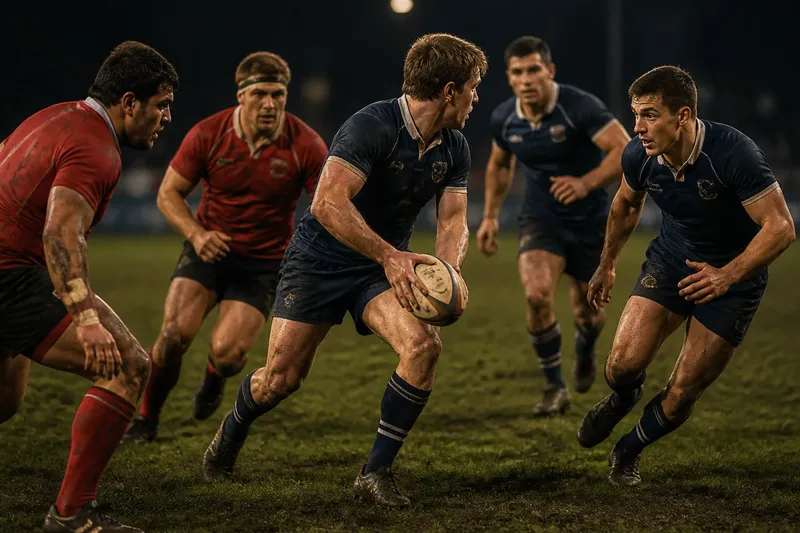
A rugby switch move works when one runner holds a defender on an apparent line while a teammate changes direction into the space that response leaves. The exchange is useful only if both threats look credible; otherwise the defense can ignore the first runner and follow the ball.
To read or plan the move, identify the defender who must choose, coordinate the change of line, and keep a second option available. The attack may gain a direct carry, free a support runner, or simply make defenders reorganize. Poor timing and cramped spacing can send everyone into the same traffic.
Find the defender who has to choose
Before considering a pass, look at the defensive line and ask which defender is responsible for two nearby threats. The useful target is the space that becomes harder to protect after that defender reacts.
A defender moving outward to track a wide runner may be slow to close inward. One stepping up to pressure the ball carrier may leave space behind. Neither cue is an automatic invitation: the rest of the line may slide across, and a covering defender may already be positioned behind it.
Check how much room the attackers have to change paths without colliding. If they are too far apart, the exchange may be easy to read; if they are bunched together, the intended lane may disappear before either player reaches it.
Make both running lines believable
The first runner must look like a genuine threat. If that player drifts sideways, slows before contact, or turns too early to find the teammate, defenders can ignore the apparent line. A convincing approach attacks a gap at pace without announcing the exchange.
The second runner also needs a credible job. That player might approach as if offering a separate carry, then cut across the first runner’s path. Or the second runner can initially hold a defender wide before cutting back inside. The arrangement depends on the defense and the space the attack wants to threaten.
Think of two people reaching for the same door: if one steps aside too early, the other’s route is no surprise. Each runner must occupy a line that asks a defender to respond before the exchange changes who is arriving in the space.
Set spacing and timing around the ball
The runners need to be close enough to coordinate, but far enough apart for the ball to travel and the new carrier to turn onto a useful path. A narrow gap can become a tangle; a wide one can make the pass slow and obvious.
In open play, a call, gesture, or established team pattern can signal the action. The passer needs a clear view of both runners and any defender likely to intercept or disrupt the ball.
Time the move to the defense’s response rather than to a fixed point on the field. An early pass gives defenders time to adjust; a late one can leave the new carrier waiting or turning away from the target. The useful moment is when the defense has begun to react but has not settled into its next position.
Carry out the exchange without advertising it
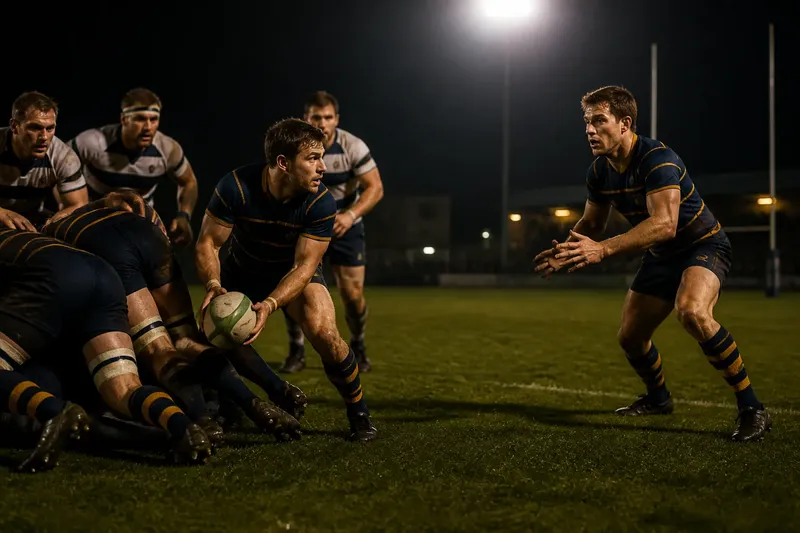
The first runner attacks the original line with enough conviction to hold a defender’s attention. At the agreed cue, the second runner changes direction as the pass is made or as the first runner draws the defender. The passer gives the ball to the player best placed to use the opening, rather than passing simply because the pattern calls for it.
The change of line should be decisive. A sharp cut makes a defender adjust their feet and hips; a gradual drift gives them time to follow both players. The new carrier still needs to see the ball and target space. A dramatic turn that leaves the player looking at the sideline is mostly a display of enthusiasm.
The first runner remains part of the move after giving up the ball. Continuing forward can hold a defender or offer support behind the new carrier. If that runner stops or turns away, the defense can release its attention and recover.
Choose a pass that suits the new line
A short pass can suit runners who are close and allow the intended carrier to take the ball at pace. A longer pass gives defenders more time to read its flight and move across. A pass behind the first runner can suit a player cutting back, provided the receiver can still move forward into the target space.
Place the ball where the receiver can attack the new line without reaching back. The passer should also avoid sending it directly into the path of a defender stepping in to intercept.
Do not force the exchange. If the defense stays square and the original runner has a clear route, that player may be the better option. If pressure shuts down the intended pass, a safe pass to support can preserve possession and let the attack choose another route.
Read what the defense gives up
Watch the defender responsible for the first runner. If that defender turns inward to follow the new carrier, the outside lane may become more available. If the defender stays with the first runner, the switch carrier may find a gap. Either response helps only if the runners and passer recognize what has actually opened.
Then look beyond the first defender. A teammate may slide across to cover the intended lane, or a defender behind the line may move forward. The switch can still help if those defenders leave another attacker less closely marked. A clean break is not the only useful outcome; forcing the defense to reorganize can create the next decision.
Say an attack has the ball near the right side, and a defender steps outward to mark a touchline runner. An inside attacker starts just behind that runner, then cuts inward as the first runner continues toward the sideline. If the passer releases the ball as the defender turns outward, the inside runner may receive facing the open channel; if another defender closes it, the outside runner remains a support option. This invented situation shows why the pass should follow the defense’s reaction, not the pattern alone.
Know when a switch is the wrong call
A switch is less useful when the defense is already moving together and no defender must choose between the runners. Changing lines may then carry the attack into the same crowded area. It is also a poor fit when the passer is under immediate pressure and cannot see the receiver or covering defender.
Be cautious when the runners move at very different speeds or when the intended carrier has to cross behind a teammate. The exchange may become hard to time, giving a defender a chance to exploit hesitation. A simpler pass or direct carry can be preferable when the defense has not committed to either threat.
After a stopped or failed switch, retain the attacking shape rather than chasing the original plan. Support players can offer passing options while the carrier protects the ball and looks for a safe next action. The purpose is to make a defender choose, not to insist that the defense choose badly.
What should you look for in a switch move?
- Check the first defender’s feet and shoulders: If they turn toward one runner, then attack the space their turn leaves; if they stay square, keep the original carry or pass available.
- Check whether both runners attack at pace: If each line looks like a real threat, continue the exchange; if one runner slows or turns early, abandon the switch and use the clearer support option.
- Check the gap between the runners: If there is room for the pass and the change of line, proceed; if the runners are crowded, choose a simple pass or carry outside the congestion.
- Check the passer’s view of the receiver: If the receiver and likely covering defender are visible, deliver only when the lane is open; if either is hidden, keep possession through a safer support pass.
- Check the new carrier’s body position: If the player can take the ball facing the target space, pass; if the player must reach back or turn away, retain the original line or use another receiver.
- Check whether a second defender covers the lane: If the lane remains open, release the switch; if a defender closes it, pass to the outside runner or support behind the ball.
What makes a switch different from a simple change of direction?
A simple change of direction is one runner changing course. A switch coordinates two or more running lines so that a defender’s response to one threat helps another attacker reach space.
Does the ball have to pass between the runners?
No. The ball can go directly to the runner changing line, or the first runner can carry while drawing a defender for a later pass. The defining feature is the planned exchange of running lines, not a particular passing pattern.
How can a defender spot the move?
Look for attackers approaching on crossing paths, a runner cutting behind or across a teammate, and a passer watching for a late change of line. Defenders can call the exchange and keep sight of the space beyond the first runner rather than following only the nearest player.
What should the attack do if the lane closes?
Use the next available support option instead of forcing a pass into a defender. The first runner may still have a carry, and a teammate outside or behind the ball may offer a safer continuation.
Use the switch to shape the next phase
A switch can be valuable even when it does not send the carrier through the line. If it draws a defender inward, an outside teammate may have more room. If it makes the defense compress around the ball, support runners can look for space farther across the field. Read the defenders’ movement after the exchange, not only the carrier’s first step.
The rugby switch move is most useful when its runners offer credible threats, the pass arrives as the defense commits, and the attack keeps another option available. Before calling it, identify the defender who must choose and the space that choice might release. That small act of reading can separate a purposeful change of line from several players arriving at the same patch of grass.